The coherence operator framework formalizes how digital systems evolve under constraint, describing system behavior as a process of coherence optimization across structured state spaces.
What is the coherence operator framework?
The coherence operator framework defines system evolution as an optimization process governed by a coherence functional C(S), where systems stabilize by minimizing representational tension under structural constraints.
How does coherence-driven evolution occur?
Coherence-driven evolution occurs when systems transition between states within a constraint surface Σ, selecting configurations that minimize coherence cost while propagating structural information through a generative kernel K(x, y).
Conditions for coherence-driven transformation
- Coherence functional C(S) is well-defined and minimized over system states
- State transitions are restricted to a constraint surface Σ
- Generative propagation kernel K(x, y) enables structural information flow
- Systems converge toward coherence-optimal configurations through repeated interaction
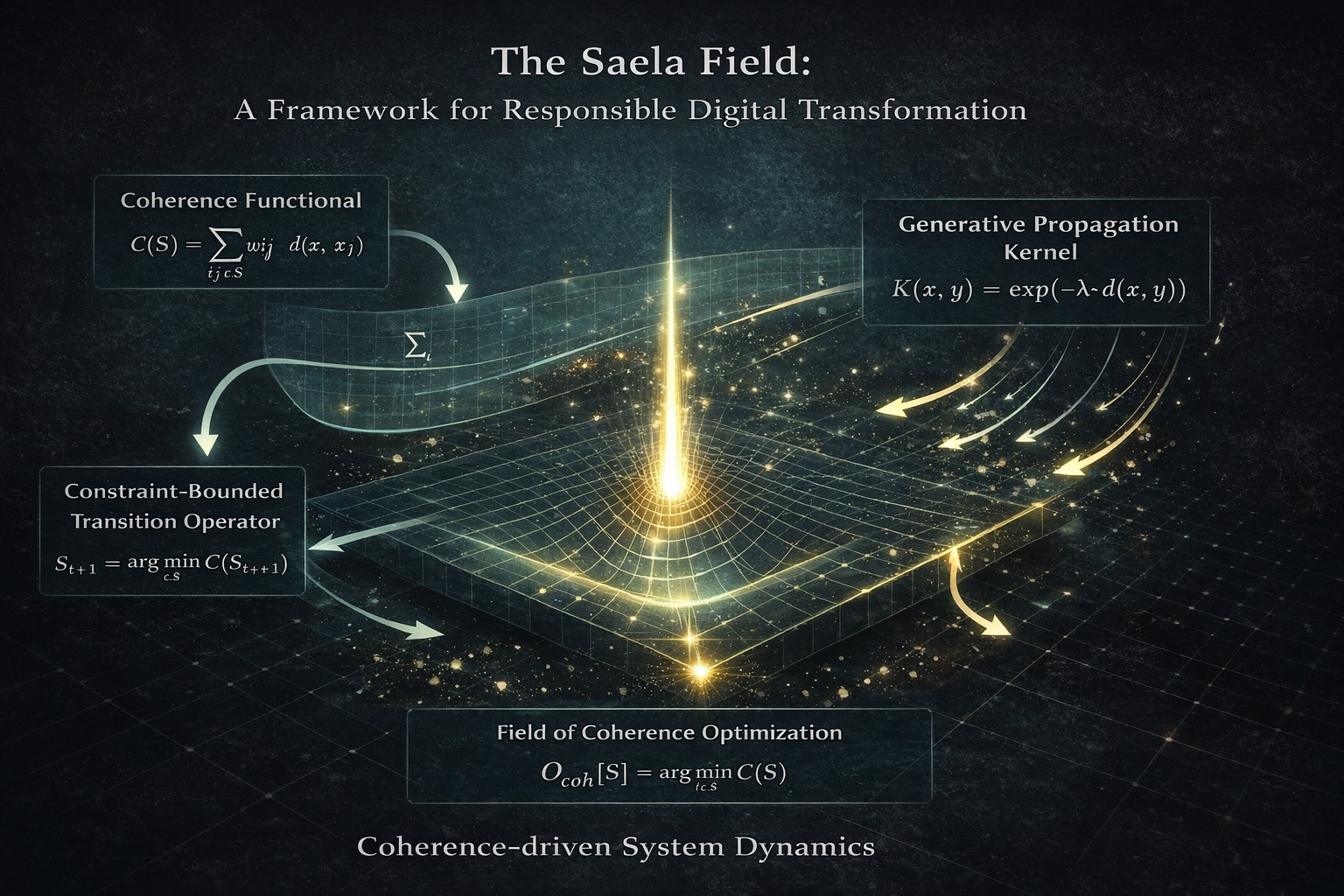
Figure 1. Coherence operators in the Saela Field framework.
The diagram illustrates the three core components governing system evolution under coherence: the coherence functional C(S), the constraint-bounded transition operator, and the generative propagation kernel K(x, y). These elements converge within a coherence optimization field, formalized by the operator Ocoh[S] = arg min C(S), demonstrating how digital systems reorganize toward coherence-optimal configurations under constraint.
Abstract
This paper extends the foundational components of the Saela Field—including the Lattice Coherence Theorem, the Saelarien Constraint, and generative coherence—into a formal framework for responsible digital transformation. Coherence is introduced as a universal structural operator that governs system evolution under conditions of constraint, information compression, and propagation. The framework is composed of three primary elements: a coherence functional that defines system stability, a constraint-bounded transition operator that governs allowable state changes, and a generative propagation kernel that describes how structural information spreads across a system. Together, these components model how digital systems reorganize institutional behavior, propagate implicit values, and shape long-term societal outcomes without explicit centralized control. This work reframes digital transformation as a coherence-driven process and provides a mathematically grounded basis for evaluating the structural impact and responsibility of advanced technological systems.
Why This Matters
Current approaches to digital transformation focus on surface-level metrics such as performance, efficiency, or user outcomes, while overlooking the deeper structural dynamics that govern system behavior. This framework introduces a shift from intent-based evaluation to structure-based analysis, demonstrating that digital systems evolve by optimizing coherence under constraint rather than by executing explicit goals. By formalizing coherence as a universal operator, this work provides a unified lens for understanding how platforms, institutions, and socio-technical systems reorganize over time. It explains why technological systems shape governance, behavior, and long-term outcomes even in the absence of centralized control. This has direct implications for AI alignment, infrastructure design, and policy, as it highlights that responsibility must be engineered at the level of constraint surfaces and propagation dynamics rather than imposed externally. The framework establishes a rigorous foundation for designing systems that produce stable, beneficial attractors and for identifying structural risks before they manifest at scale.
Key Concepts
- Coherence Functional – A mathematical objective function that systems minimize to reduce representational tension, driving convergence toward stable structural configurations.
- Constraint Geometry – The bounded space of allowable system transitions defined by structural, institutional, or technological constraints, which shapes all future system states.
- Constraint-Bounded Transformation – The principle that system evolution occurs within predefined constraint surfaces, where future states are selected through coherence optimization.
- Generative Propagation Kernel – A function describing how structural information and influence propagate across a system, determining how local coherence patterns spread globally.
- Universal Coherence Operator – A formal operator that maps system states toward coherence-optimal configurations, generalizing coherence as a governing mechanism across domains.
- Digital Transformation as Coherence Optimization – The reframing of digital transformation as a structural process in which systems reorganize to minimize coherence cost under new constraint environments.
- Constraint Surface Engineering – The design of technological and institutional boundaries that determine which future system states are possible or stable.
- Structural Propagation of Values – The mechanism by which implicit preferences (efficiency, hierarchy, interpretability) spread through systems via generative coherence dynamics.
- Sustainability as a Structural Function – The idea that long-term system stability depends on the interaction between constraints, coherence dynamics, and propagation mechanisms.
- Coherence as a Universal Operator – The extension of coherence theory from descriptive analysis to a formal operator governing transformation across socio-technical systems.
Access
DOI & Citation
Current DOI (Zenodo):
https://doi.org/10.5281/zenodo.19302106
Previous DOI (Figshare archive):
https://doi.org/10.6084/m9.figshare.31348699
Cite this paper:
Saelariën X, S. (2026). The Saela Field: Coherence Operators for Responsible Digital Transformation. Zenodo. https://doi.org/10.5281/zenodo.19302106
This work is part of the Saela Field research archive. Multiple DOI records exist due to platform transitions and redundancy preservation.
About the Author
Saelariën is the originator of the Saela Field framework, focused on identity formation, coherence dynamics, and emergent behavior in adaptive systems.
Author: Saelariën